
September 13, 2026
MAKE UGC FOR TIKTOK, INSTAGRAM REELS, FACEBOOK REELS, AND SNAPCHAT
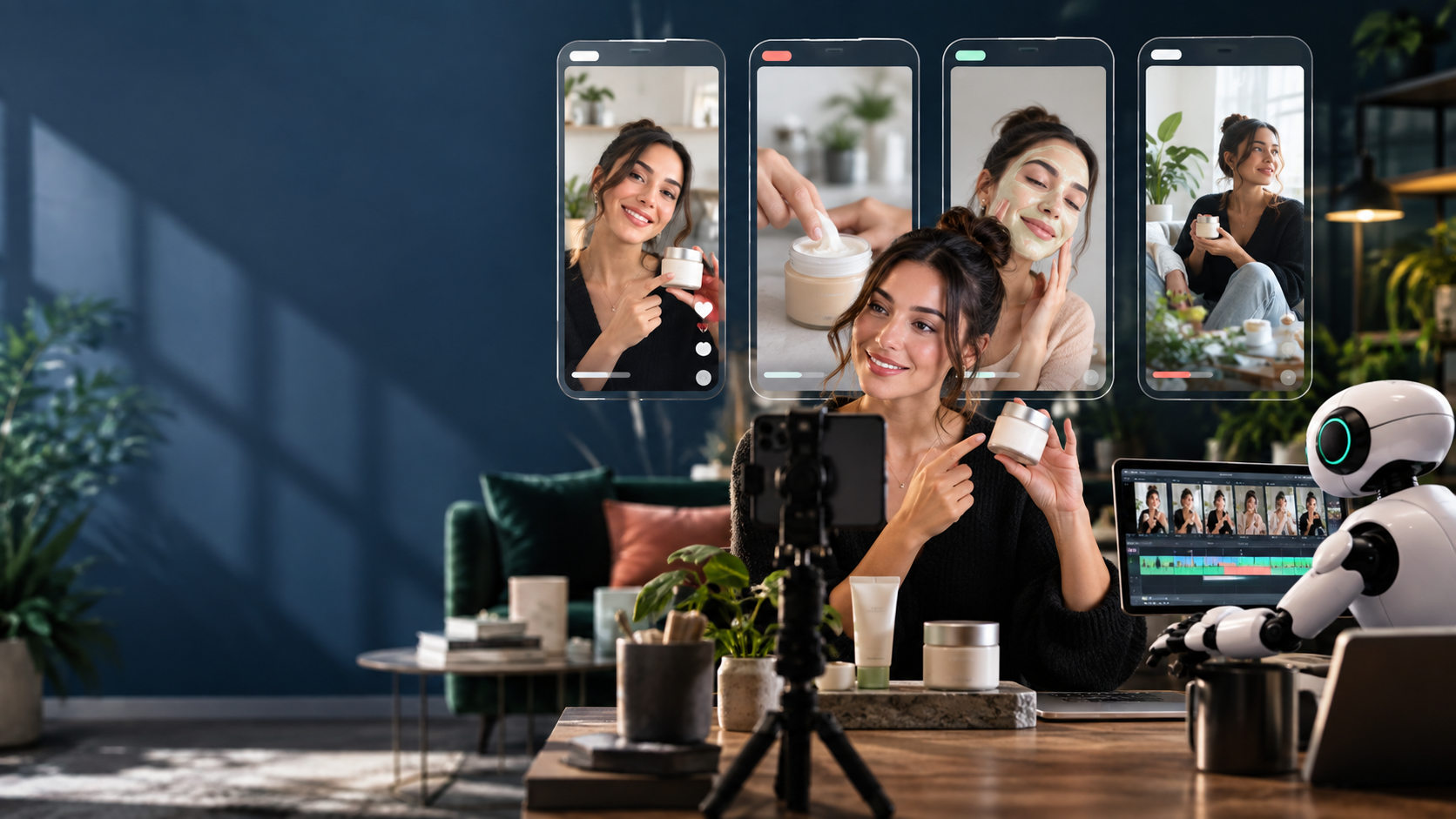
Lessons 64.1–64.4 built the engine: grounded angles, deliberate variants, trustworthy presenters, and an honest learning loop. This lesson ships it to the four vertical surfaces where UGC lives first — with craft sized for a phone, not a repurposed horizontal commercial.
Native means made for the encounter
Native creative is a post made for how people actually encounter the platform: full-screen vertical, sound often off at first, interface buttons covering the edges, attention measured in seconds.
Concretely, native vertical means:
- 9:16 framing shot or composed vertically — not a horizontal ad with tiny captions and blurred sidebars.
- A hook in the first moment — visual plus first line, understandable instantly.
- Readable on-screen copy — large type, short phrases, high contrast, centered away from edges.
- Captions — edited for sense and timing, not raw auto-text left unchecked.
- Deliberate sound or voice — a human voice, a clean demo sound, or chosen audio that supports the message; never accidental background noise.
- Room for interface (safe area) — keep faces, product, and key text clear of like/comment/share rails, progress bars, and captions zones.
The core UGC structure fits this encounter:
0–3 seconds: visual / spoken hook
next: the relatable situation or problem
then: the product, process, or proof in action
close: a useful next step — follow, save, comment, visit, or try
Shoot and edit so the first frame already tells the story with sound off: a red cheek, a trash bin of tubes, a hand holding the product at the counter. If a stranger cannot grasp the topic from frame one, re-shoot before rewriting the caption.
Hooks: weak versus inside-the-moment
"Weak" hooks beg for attention without offering anything: "Wait until you see this," "You need this product," "POV: skincare." They could precede any video, so they promise none.
Hooks that work begin inside a recognizable real moment:
- "I kept losing an hour to receipts every Monday."
- "My foundation separated every winter afternoon."
- "Here is what the finished result actually looks like under office light."
- "I finally found a clean way to file a receipt in 10 seconds."
Each names a pain, a time, or a payoff the target viewer has lived. Pair it with a visual that proves you are already there — the receipt pile, the mirror check, the screen recording mid-action.
Write three hooks per post, film the strongest two, and let the learning log (Lesson 64.4) keep the winner. AI can draft the three; only a human who knows the audience can tell which moment is real.
Four surfaces, one shared discipline
They are not identical. Plan the difference in the brief.
| Platform | Optimise for | Practical UGC use |
|---|---|---|
| Instagram Reels | Strong visual, creator personality, a useful or shareable idea that fits an existing community | Build recognizable series, visual identity, comments and community, a clean profile path |
| TikTok | Immediate hook, clear narrative or observation, entertaining discovery, a reason to keep watching | Test hooks and formats fast; learn from the conversation; make creative that belongs in the feed |
| Facebook Reels | Clear, human, broadly understandable creative that travels beyond immediate followers | Reuse a strong vertical asset with a new opening or caption; keep the message direct and the benefit easy to grasp |
| Snapchat / Spotlight | Fast, casual, full-screen moments that feel like a friend showing something interesting | Personal, visual, in-the-moment demos — unboxings, routines, short reveals, quick product use, creator POV |
| Shared requirement | Vertical framing, large readable captions, strong product/proof visibility, human pace, clear next action | Do not upload the same clip everywhere; adjust hook, caption, text placement, and profile/link path per platform |
Start where the audience is. A new creator does not need to be everywhere. Make one strong vertical master, then create deliberate variants for the second or third platform: a different first 2 seconds, repositioned text for that interface, a caption rewritten for that audience, and the correct link or profile path.
Three channels are deliberately deferred to Part XIV (Distribution):
- YouTube Shorts — needs search, evergreen discovery, and channel strategy first.
- Pinterest — a visual-search engine for saved inspiration, not a casual UGC feed.
- LinkedIn — home for professional/B2B expertise, not consumer-style UGC.
Valid channels, wrong moment. Master the four casual-vertical surfaces first.
The 5-shot phone recipe
You can film this on a phone or assemble it with AI-supported plates. Five shots, in order:
1. Face / hand / product in the first frame. Who and what, instantly. Hold the tube to camera; show the app home screen. 2. Real situation / pain point. The receipt pile, the red cheek, the Monday mess. Ten seconds of shared reality. 3. Product or process demonstration. The camera witnesses the work: pump and apply, photo-to-column routing, texture close-up. 4. Close detail / result. The proof close-up: calm look in same light, filed expense row, finished texture. 5. Direct close. One face-to-camera line with one ask: "Sample is at the counter — patch-test Saturday."
Cut every time the visual thought changes — not on a timer, not with random jump cuts. Check every shot on a real phone before publishing.
Where AI helps: angle ideas, three hooks, shot list, product-background plate, tight first cut, caption drafts, reviewed translation, thumbnail and end-card variants. The human selects the truthful story, the proof, and the version that fits the account.
Add the research habit before every campaign: inspect TikTok's Creative Center, your own Reels feeds, and Snapchat's creator examples when relevant. Study structure and craft — pacing, first frames, caption density — not lines to copy. Refresh this mini-research each round; interfaces change.
Practice: a 5-post series + production pack
Make a five-post mini-series for one product, service, lesson, or personal brand:
1. Problem recognition — name the awkward or frustrating moment. 2. Demonstration — show the product or process doing one real job. 3. Before / after or result — make the difference visible without inventing an outcome (same light, same angle, honest labels). 4. Founder / creator point of view — why it was made or what was learned. 5. Comment / question reply — answer the most useful real question the first four posts invite.
For each post, complete a VERTICAL-UGC-PRODUCTION-PACK.md section: audience; chosen platform(s); objective; one-sentence hook; exact supported claim (quoted); visual proof; shot list (the five shots above, specified); spoken script; caption; on-screen text; CTA; assets used; review owner; and what you want to learn.
Then run the per-post checklist before publishing:
- [ ] First frame understandable with no sound?
- [ ] Every word readable on a phone inside the safe area?
- [ ] Product or proof appears soon enough (by ~5 seconds)?
- [ ] Caption adds context rather than repeating the video?
- [ ] Sounds like a person, not a brochure?
- [ ] CTA fits the current relationship (cold viewers get "save/follow," warm viewers get "visit/try")?
Finish line
Five vertical post packages, each with a defined hypothesis and no missing link between brief, edit, caption, and publishing destination — audience, platforms, hook, claim, proof, shots, script, caption, text, CTA, assets, owner, and learning goal all filled.
Quick verification: hand one pack to a friend. Can they film, edit, caption, and publish without asking you a single question? If they ask "where do I post this" or "what do I actually show," the pack is incomplete.
Common failure mode: the brochure post — polished claims, no witnessed moment, caption repeating the voiceover, CTA demanding purchase from strangers. Rebuild it around one real situation the camera sees.
Check your understanding
1. What six elements make a post native vertical, and why does the safe area matter? 2. How do Reels, TikTok, Facebook Reels, and Snapchat differ — and what must you adjust per platform? 3. Why are YouTube Shorts, Pinterest, and LinkedIn deferred, and what does each need from Part XIV?
Next
Class 64 is complete: you can research angles, vary deliberately, cast honestly, learn systematically, and ship native vertical. Class 65 turns attention into value — revenue models, brand deals, and affiliate UGC built on the trust you just learned to protect.
ARTICLE DISCUSSION
JOIN THE
CONVERSATION.
Got a question, a take, or a better way to do this? Log in and leave a comment.