
September 13, 2026
HIGGSFIELD, SEEDANCE, AND THE GLOBAL VIDEO-GENERATION RACE
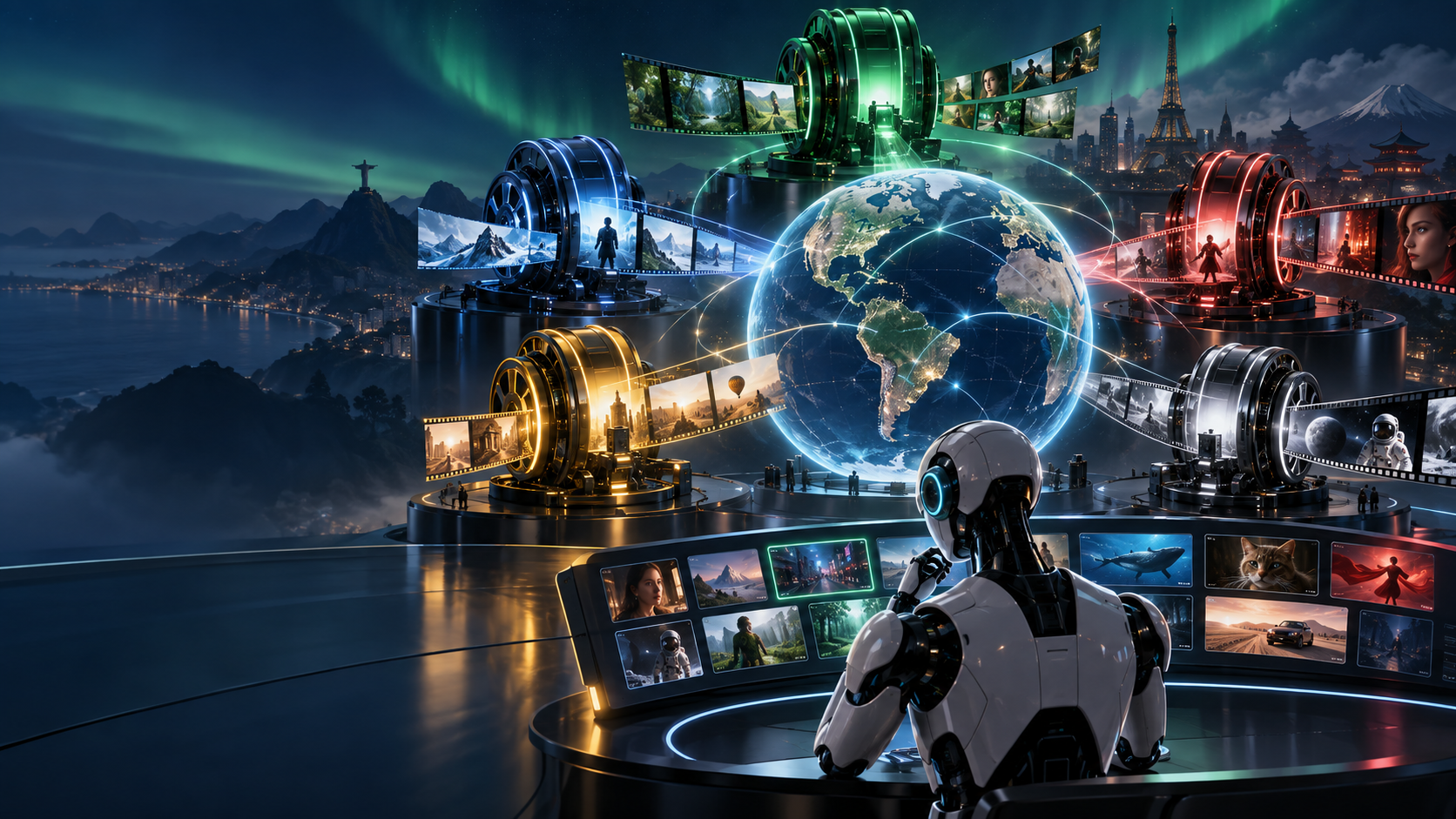
You can plan a sequence (59.1) and direct a shot (59.2). Now: where do you generate? The video field moves monthly, spans the US and China and open-model communities, and no single leaderboard survives contact with your actual brief.
Compare by job, not by brand
Forget "which model is best." Ask "which environment is best for *this shot*?" The durable jobs:
- Fast social-first cinematic clips: mood, motion, camera feel for Reels/TikTok/Shorts. Speed and taste matter more than exactness.
- Reference-led visual storytelling: character, product, or style must persist across shots. Reference/keyframe control matters most.
- Product shots: labels, shape, color, material, hands. Fidelity review matters most.
- Character consistency: the same face/wardrobe across scenes. Identity controls matter most.
- Audio-video work: dialogue, narration, music, lip-sync, sound effects generated or aligned with picture.
- Editing and control: storyboards, keyframes, extensions, scene assembly, timelines.
- Local / open workflows: run on your machine or rented GPU, weights you can inspect, availability where you live.
A tool can win one job and lose the next. Your shootout in this lesson records exactly that.
Two environments to understand first
Higgsfield — the creator production surface. Treat Higgsfield as a practical example of a creator-facing environment built for cinematic short-form production: camera direction, keyframe/storyboard planning, image generation feeding video, and reference/character controls that turn a simple concept, image, or product link into a planned social asset. Its value is not "another model" — it is a surface that walks a creator from brief to shot to sequence. Exact surface names, model choices, and pricing change; recheck them at lab time (Appendix 59.B runs the full lab).
ByteDance Seedance — why China matters. Treat Seedance as a practical example of why Chinese video systems belong in every serious creator's field of view. The Seed team describes Seedance as a multimodal audio-video model that can take text, images, audio, and video references as ingredients in one workflow — exactly where modern production is heading (reference bundles, not bare prompts). For a creator this means: test reference fidelity, motion quality, audio handling, availability in your region, and cost on your job — instead of assuming any default is automatically best. Appendix 59.C runs the full lab.
The rest of the watched field (no winner declared)
Name the routes honestly, rank none permanently:
- ByteDance/Seed visual systems and Alibaba/Qwen visual systems — major Chinese builder families; test for quality, reference control, text handling, and price on your brief.
- Tencent HunyuanVideo / open workflows — the open-weights route; inspectable, self-hostable, region-independent, but you own the setup and GPU cost.
- Kling — strong creator option for text/image-to-video and short scenes; Appendix 59.D.
- Runway — generation plus reference-driven character/object/location work and post-production-style experiments; Appendix 59.F.
- Google Flow / Veo — Flow as the filmmaking environment around Veo-class models: ingredients/references, scenes, extensions; Appendix 59.E.
- Sora — text-led scene direction route; Appendix 59.G.
- Creator-platform models and avatar/editor environments (CapCut, Captions, HeyGen, Synthesia, Pika, Luma, Hailuo/MiniMax and others) — where generation meets timeline, captions, and avatars.
Availability, price, controls, and interface differ by region and change quickly. The workflow — brief, references, variations, review — outlasts any picker. Tool names in this class are refreshable current examples; always recheck official pages and your account at lab time. No results are invented here; every claim in your shootout must come from your own test.
The selection test: one 8–12 second brief
Run the *same* brief on two available systems. It must require all of:
- One clear subject (person, product, or object you care about).
- One controlled movement (action + one camera move from 59.2).
- Product/character consistency (a detail that must not drift: label, face, color).
- One intended camera move (locked, push, pan — stated in advance).
- One reference (image, style frame, or product photo you supply where supported).
Inspect the same dimensions for both: motion naturalness, composition, continuity with the reference, editability (can you cut it?), sound/dialogue if the job needs it, generation time, and cost/credits. Write down what you actually saw. "Felt better" is not a score.
Exercise: VIDEO-MODEL-SHOOTOUT.md
# VIDEO-MODEL-SHOOTOUT.md — [project + date]

## The shared brief (8–12s)
- Subject / action / environment / camera / duration / constraints:
- Reference file(s):

## System A (name + plan + date + region/account notes)
- Settings used:
- Time taken / cost:
- Output file + screenshot:
- Scores 1–5: brief adherence / motion / continuity / reference control /
  audio (if needed) / editability / speed / cost / export quality

## System B (same headings)

## Decision
- Winner for THIS production + why (one constraint that decided it):
- Fallback + when I would switch:
- Recheck date: (interfaces/pricing rechecked at lab time)
Finish line: a justified choice of creative environment for one short production — not a claim about which model rules the internet.
Verify fast: cover the system names and read only the "decision" paragraph. Does it cite your brief's hardest constraint (consistency? camera? cost? availability?) rather than hype? If not, re-run the test. Common failure: picking by demo-reel excitement, then discovering the winner cannot hold your product label across two shots.
Check your understanding
1. List the seven production jobs. Which two does your next video actually need? 2. What makes Higgsfield a "production surface" rather than just a model? 3. What makes Seedance representative of where production is heading? 4. Why must the same brief, reference, and scorecard be reused across systems?
Next
You have a tool for the job. Next, Lesson 59.4 teaches the part most AI demos skip: continuity, character/product sheets, failure patterns, and the line between illustration and evidence — ending in a CONTINUITY.md bible for your five-shot story.
ARTICLE DISCUSSION
JOIN THE
CONVERSATION.
Got a question, a take, or a better way to do this? Log in and leave a comment.